Electricity
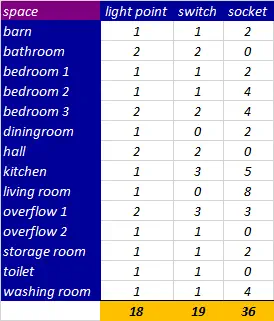
When I was making an inventory of the electric such as light points, switches and
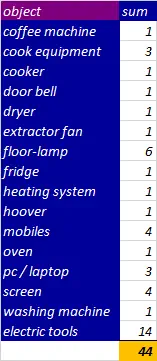
sockets in my house and follow-up which equipments all uses electricity, I was
overwhelmed.
You just have to press the switch and you have light. Press a button and you can
watch television, cook ceramic or vacuum.
So a few questions crossed my mind.
- do we need all this?
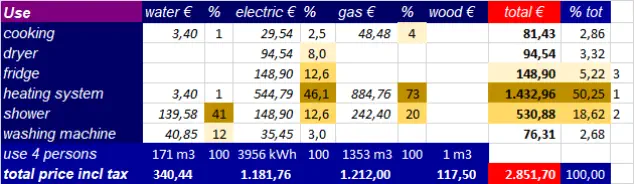
- although we showed it costs us 45%, what happens with the power if we don’t
use electric?
- and if we need it, could it be less?
electric wiring
If you want less light points, it means that if you want some light, you need a socket. You can also use wireless floor-
lamps but it works on wifi. We are not great fans of wifi for different reasons. So if all these wiring is 24/7 under
voltage what does it do?
If wires are not well isolated than it could give leaking current. By solar panels if they are humid, there could be
leaking current. You could prevent it by using a travo-less inverter. I have not red that leaking current is under
normal circumstances a big issue.
lamp
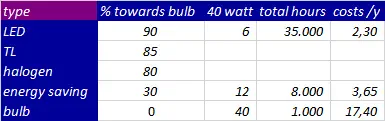
In our house we have different types of lamps:
- energy-saving lamps;
- halogen lamps;
- LED lights;
- bulb lamps.
https://www.milieucentraal.nl/energie-besparen/zuinige-lampen/energiezuinige-lampen-op-een-rij/
In this site they give the saving in % towards bulb
You can use a dimmer, so you don’t have to buy all different types of strength to create for instance romantic soft
light when needed.
equipment electric
(later)
heating
The heating is a special item. It is by far the biggest cost factor and it warms the water for the kitchen, the bathroom
and for the radiators to warm the house. 46% of the electric and 73% of the gas. In total 50% of all costs.
The heating uses water, electric and gas.
floor heat
For the radiators the input is cold water and will be heated by gas to a temperature of 60/80°. For floor heat the
input temperature is 35°. It gives a saving of 50% and also to keep the temperature of the rooms on the same level.
You can organize the different basic temperatures for the different rooms in the pantry were the input of the water
is.
solar collector
Instead of heating the water by gas you can use solar collectors on the roof. Via pipes you transport cold water to
the solar collector. It will heat the water up to between 90 and 120°.
boiler
In order to ensure that the heated water will not cool down to quickly, you stream the hot water in a boiler.
There are boilers that have a lost of merely 3° C during the night.